MDM Architectural Styles Explained: Registry to Centralized
Last week, we concluded Part 2 by discussing how naming conventions impact master data. We looked at why poorly named fields create confusion, slow adoption, and lead teams to misuse otherwise clean data. Even strong governance breaks down when people cannot understand what a field represents. We learned that naming is not just cosmetic, but that it is a control surface.
This week, we begin Part 3 of the series by stepping back and looking at architecture. Specifically, how master data is structured, shared, and controlled across systems. Registry, consolidation, coexistence, and centralized models are often mentioned in MDM conversations, but rarely explained clearly. Understanding these architectural styles is critical because every governance rule, quality check, and stewardship process depends on the architecture underneath it.
Most teams hear terms like registry, consolidation, coexistence, and centralized MDM. Few can explain what they mean in practice. The names sound similar. The impact is not.
Each architectural style solves a different problem. Each one asks different things from your systems, your teams, and your governance model. Choosing the wrong style creates friction. Choosing the right one builds trust.
This guide explains the four core MDM architectural styles in plain language. You will see how each one works, where it fits, and what it requires to succeed.
What Is an MDM Architectural Style?
An MDM architectural style describes how master data is managed across systems. It defines where data lives, how changes flow, and who controls the truth.
This is not just a technical decision. It shapes how teams work. It affects timelines, cost, risk, and ownership. It also determines how much change the business must absorb.
Some organizations need visibility fast. Others need control above all else. No single style works everywhere.
Registry Style
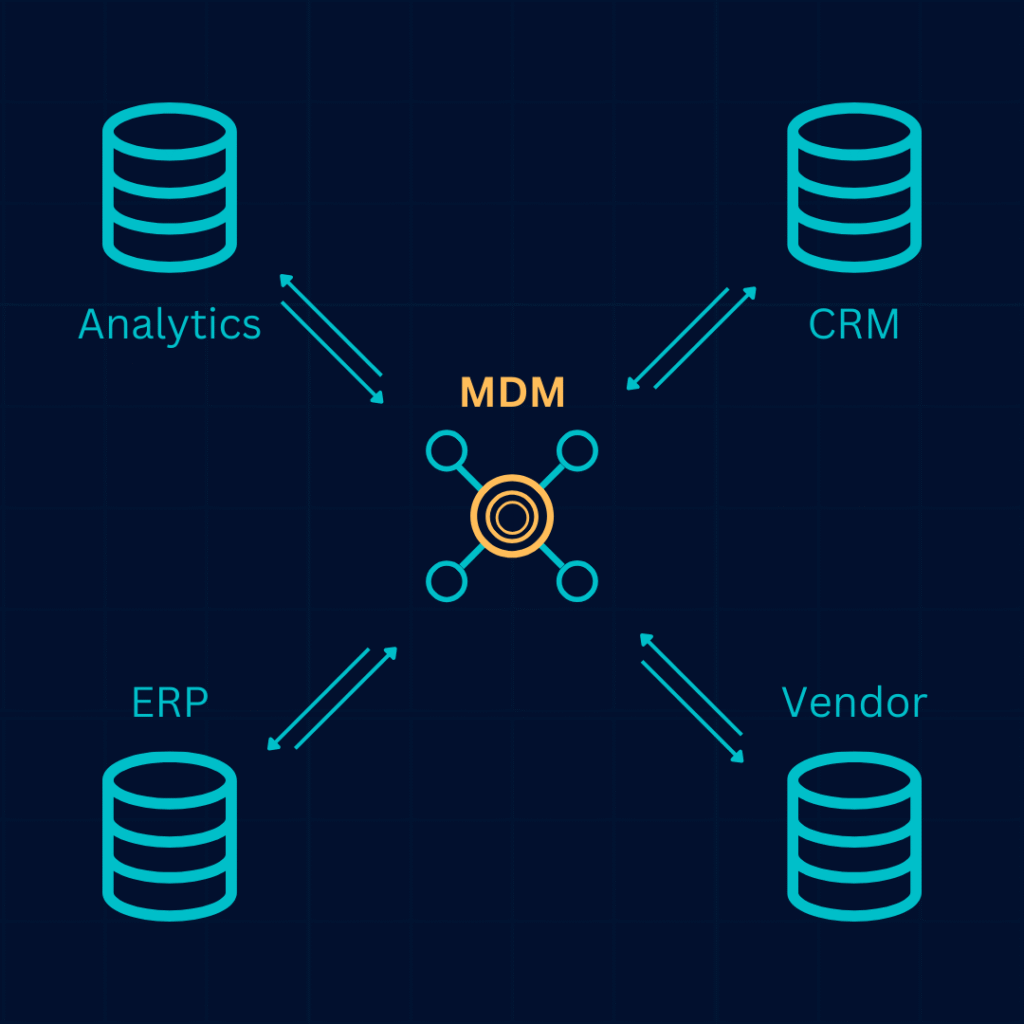
The registry style is the lightest MDM architecture. The MDM system does not store full master records. It stores links between records that already exist in source systems.
Think of it as a smart index. It knows which records belong together. It does not rewrite or replace them.
How Registry Works
Each source system keeps its own data. The registry ingests identifiers and key attributes. Matching logic connects related records across systems. The registry presents a unified view by pointing back to the sources.
The source systems remain the system of record.
Where Registry Fits
Registry works well when disruption must stay low. Common scenarios include:
- Legacy systems that cannot be changed
- Regulatory environments that require source control
- Mergers with overlapping customer or product data
- Early MDM efforts focused on discovery
Registry is about visibility, not enforcement.
Strengths of Registry
- Fast to implement
- Minimal impact on existing systems
- Useful for analytics and reporting
- Strong auditability
Limitations of Registry
Registry does not fix bad data. It only connects it. If source systems disagree, the disagreement remains. Changes made locally do not propagate. Over time, records drift.
Matching logic can mask problems, but it cannot solve them.
Registry Governance Needs
Registry still requires governance. Teams must agree on identity rules and matching thresholds. Someone must review duplicates. Without stewardship, the index loses accuracy.
Consolidation Style
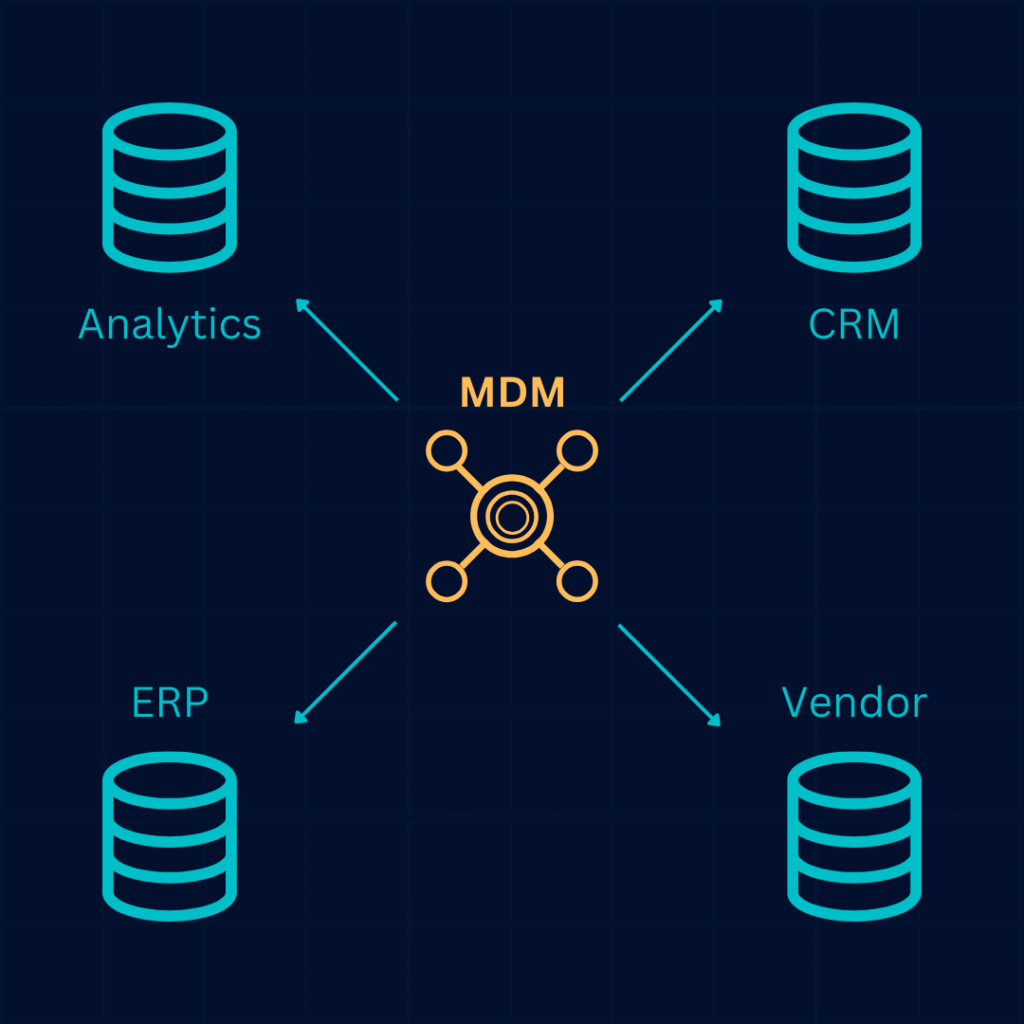
Consolidation moves master data into a central hub. The hub stores a cleaned and merged version of each entity. Source systems continue to operate independently.
The hub becomes the most trusted view of the data.
How Consolidation Works
Data flows into the hub through batch loads or event streams. Matching and survivorship rules create a golden record. The hub feeds BI tools, data warehouses, and analytics platforms.
In most cases, changes do not flow back to source systems.
Where Consolidation Fits
Consolidation works best when reporting accuracy matters most. Teams often choose it when:
- Data is fragmented across systems
- Dashboards require consistent numbers
- Operational workflows cannot change
- A future shift to coexistence is planned
It improves trust without forcing operational change.
Strengths of Consolidation
- Higher data quality
- One place for cleansing and stewardship
- Better reporting outcomes
- More control than registry
Limitations of Consolidation
The hub improves analytics, not operations. Source systems still drift. Conflicts still exist. The hub requires ongoing maintenance and skilled stewards.
Without investment, quality degrades over time.
Consolidation Governance Needs
Teams must define the golden record. Ownership rules must be clear. Stewards need authority to resolve conflicts. Governance keeps the hub reliable.
Coexistence Style
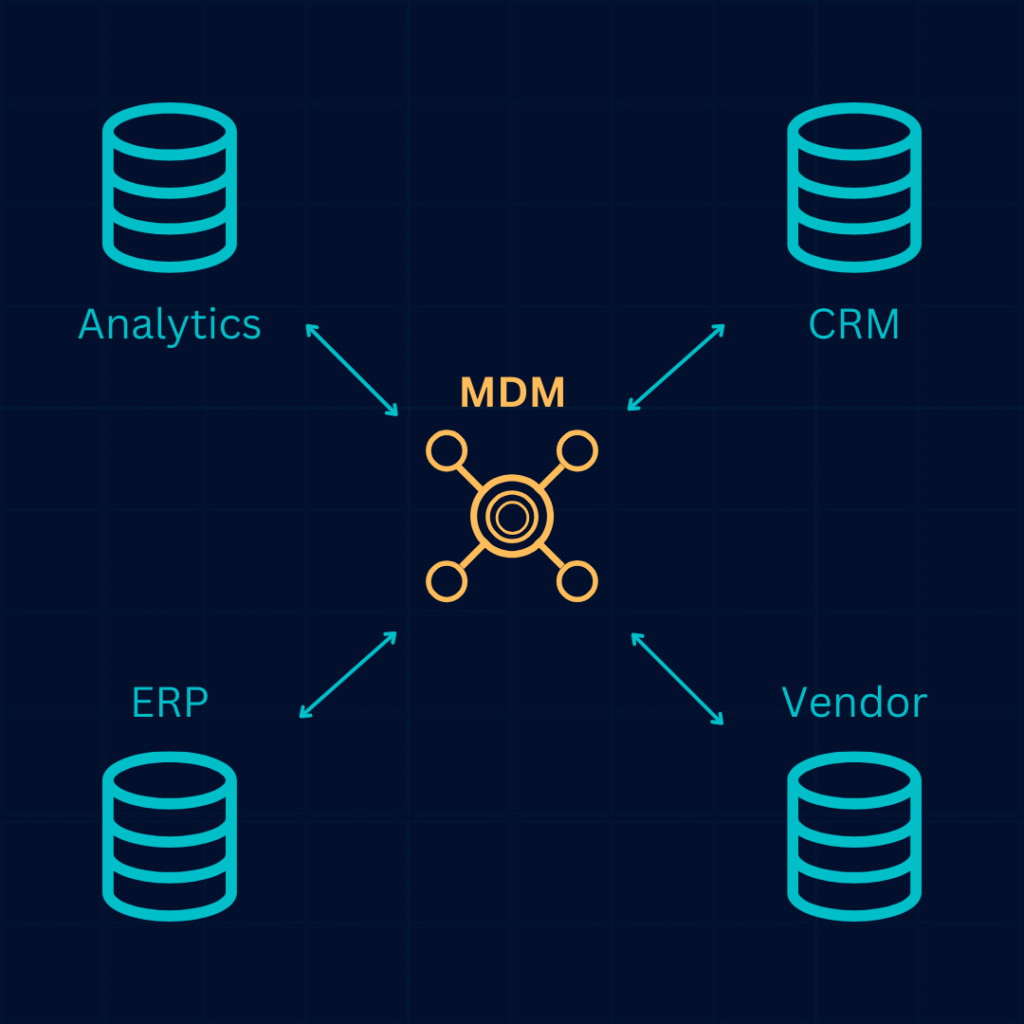
Coexistence sits between consolidation and centralized MDM. The hub still manages the golden record. The difference is bidirectional sync.
Changes flow between the hub and source systems.
How Coexistence Works
Source systems send updates to the hub. The hub validates and merges them. Refined data flows back to the systems. Syncs can run in near real time or on a schedule.
Ownership rules determine which system controls each attribute.
Where Coexistence Fits
Coexistence works when operational consistency matters, but full centralization is not feasible. Typical use cases include:
- Retail with online and in-store systems
- Multi-channel customer management
- ERP modernization programs
- Gradual MDM maturity journeys
It supports phased adoption.
Strengths of Coexistence
- Consistent data across systems
- Flexibility for local updates
- Gradual rollout
- Improving data quality over time
Limitations of Coexistence
Sync adds complexity. Conflicts must be resolved. Integration costs increase. Errors can propagate quickly if rules fail.
This style demands discipline.
Coexistence Governance Needs
Ownership must be explicit. Change management is critical. Stewards monitor sync health and resolve conflicts. Weak governance causes instability.
Centralized Style
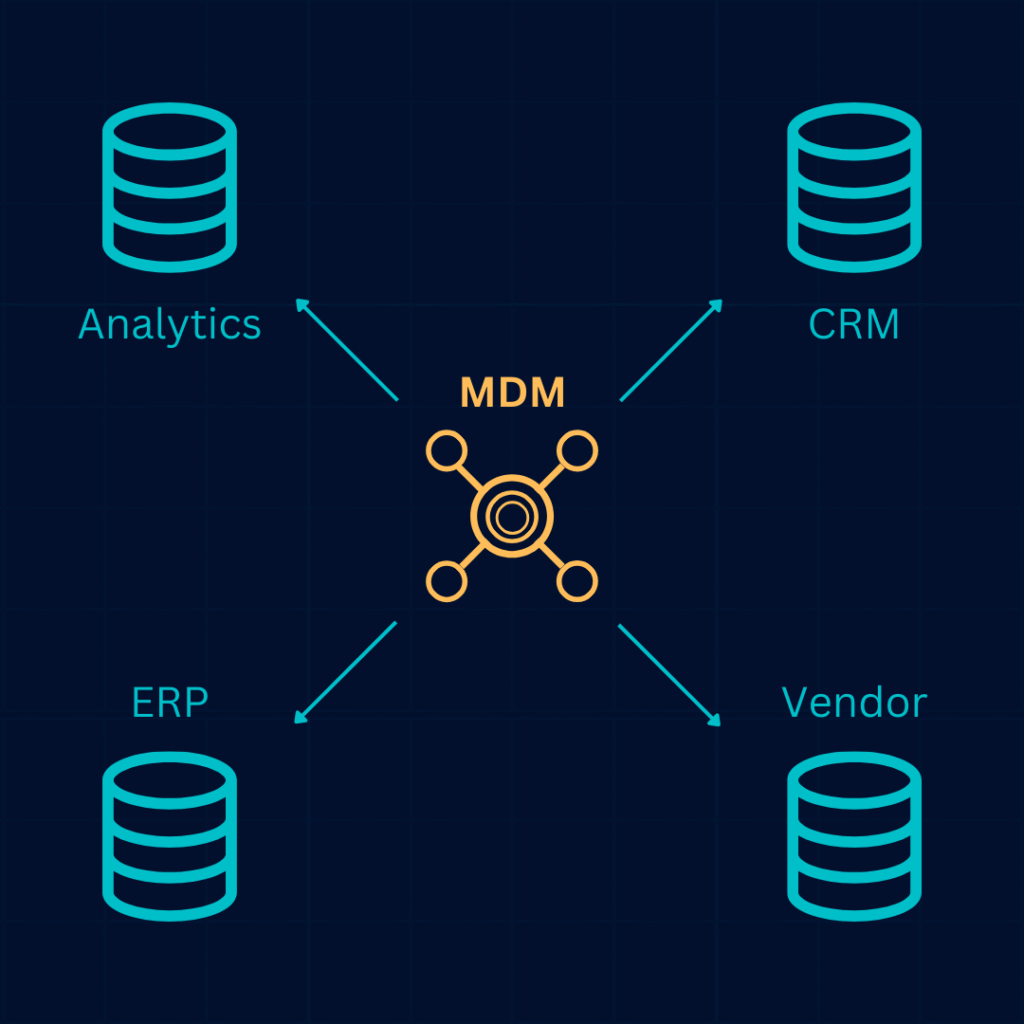
Centralized MDM places all master data control in the hub. All create, update, and delete actions occur there. Downstream systems consume data but do not change it.
This is the most controlled architecture.
How Centralized Works
Applications send change requests to the hub. The hub validates them and distributes approved updates. No system bypasses the hub.
The hub is the system of record.
Where Centralized Fits
Centralized MDM fits environments where accuracy is non-negotiable:
- Finance and banking
- Insurance policy management
- Highly regulated enterprises
- Complex operational ecosystems
It suits organizations with mature governance.
Strengths of Centralized
- Maximum consistency
- Clear audit trails
- Strong stewardship controls
- Reliable operational data
Limitations of Centralized
Centralization requires major change. Workflows shift. Legacy systems need integration. The hub becomes critical infrastructure. Cost and risk are higher.
Without executive support, adoption stalls.
Centralized Governance Needs
Governance must be mature. Ownership must be enforced. Approval workflows must scale. Stewardship is mandatory.
How to Choose the Right Style
Each style supports a different need:
- Registry solves identity discovery
- Consolidation solves analytics trust
- Coexistence solves operational consistency
- Centralized solves enterprise control
Most organizations move through these styles over time. Progression happens when the current model can no longer support business needs.
Start where pain is highest. Build confidence. Improve governance. Then evolve.
Final Thought
These four MDM architectural styles exist because real environments are complex. Systems carry history. Teams inherit constraints.
You do not fix everything at once. You choose the style that fits today. You prepare for tomorrow.
The right MDM architecture is the one your teams can sustain, your systems can support, and your governance can enforce.